Up and Away
Σtella makes her Sub Pop debut with the mesmerizing Up and Away, an old-school pop paean to the pangs and raptures of love. From the Greek folk-inflected get-go, we’re swept up in Σtella’s world – and it’s quite the captivating place to be.
The singer-songwriter joined forces with artist and producer Tom Calvert (aka Redinho), and it was a match made in Athens; the results are heavenly. Tom caught one of Σtella’s gigs on a visit to the city. He reached out, they started hanging out, and the pair soon clicked creatively. Both mention chemistry when asked about their collaboration and it’s clear, from what we hear, they had it in spades. The meld is seamless.
Σtella’s songs have always riffed on American and Greek mid-century pop but Up and Away doubles down on the vintage aesthetic. Tom says he styled the record “as if it was a rare gem from the ’60s found in a box of records in Athens,” and Σtella notes she was ready for a more “deeply Greek touch – it felt comfortable and right, smoothly fusing with the pop.” The bouzouki appears on a full five tracks played by Christos Skondras who, she says, “was brilliant at improvising,” while Sofia Labropoulou on the kanun “brought an insane amount of dreaminess to the last two songs. Having these amazing musicians play for Up and Away – I couldn’t be more grateful.”
While not exclusively a confessional artist, Σtella is always intimate – when she sings, it’s personal. She says she writes, “about things I feel passion for. Stories about me, about others, about all that’s there in love and war.”While she won’t be drawn out on more private inspirations for this album (“There were one or two interesting things going on in my life, but we won’t be going into those…”), Σtella will say she was, “in a very emotional state at the time, which came through in the lyrics and vocals.” And it’s true, her honeyed voice – layered in those unmistakable harmonies of hers – thrillingly runs the gamut from tender to terse, by turns bracing and smitten, aching and forlorn.
But it’s the lyrics that feel key. Across her output, Σtella has proven herself a strong storyteller, and Up and Away is no exception (the guise of the medieval bard she assumes on the cover is telling). Past releases have been studded with gem-like vignettes – a diverse array of stories set tightly together to form non-linear narratives unified by emotion. Her latest feels singular in that it seems to trace a longer-form tale across songs, with each track escalating the record’s erotic arc. Rollicking album opener “Up and Away” launches us headlong into an all-consuming affair. She’s caught, she shivers, thrilled by a new beginning, the sweetness of her vocals offset by vertiginous, blistering blasts of bouzouki. And so the sensual scene is set.
Languorous “Nomad” sees her fall deeper, groove slower into love. Imbued with a tender urge to understand the other, and tinged with sadness, the song ends with the rhythmic thrum of cicadas – nature too is calling out, courting a mate. “Manéros,” meanwhile, is a foreboding instrumental interlude threaded with driving virtuoso runs of improvised bouzouki shimmers. An 1881 study defines the manéros form as “a ballad of erotic passion bursting from a heart on fire, or a deeply charged lament for the loss of one’s beloved.” Consider this a spoiler for what’s to come.
“Charmed” opens with a disarming sixties “shoop” and lolls delightfully along, its feel-good surface bop hiding more melancholy truths – and insecurities. Not so “Another Nation,” which boasts all the strut and swagger of an artist happy to be stepping out. Here’s how love can feel: as joyous and beautiful and ridiculous as a flamingo galumphing forward to take flight. Boisterous “Black and White” drives home the vagaries of love (“you redirected, you changed your mind”) with a cyclical guitar riff at the song’s heart mirroring the lover’s spiraling complaint.
And then it hits: “Titanic” relays the relationship’s end in ways unexpectedly hopeful, plucking a constellation of endearing bygone names (John Borie, Laura Mae, and the like) from a list of the sunken liner’s survivors. With a breezy whistle, and propelled by bouncing staccato strums, Σtella makes it safe to shore, alone.
The album’s final three tracks are left to deal with the aftermath. Heartfelt “The Truth Is” leaps forward to a time when she feels “alright, but still I miss you every night.” Unable to justify why they’re apart, most everything falls away as the song builds to an emotional climax that has no need of words, with Σtella’s affecting voice left to melt into the bouzouki as she gives us an ever-surging series of sensational “ooos” that compellingly make her case.
Infectiously bassline-led “Who Cares” takes a more petulant, finger-pointing approach before toppling cheerfully into a boozy coping mechanism (“in a bottle we all fell”). But it’s mellow and reflective outro “Is It Over” that perhaps best distills Up and Away’s core concerns: the conflicting and conflicted emotions inherent in love, that live on in ways we can’t always understand or control. Love is like this record: when it’s over, you feel it still for time to come.
Original: $8.00
-65%$8.00
$2.80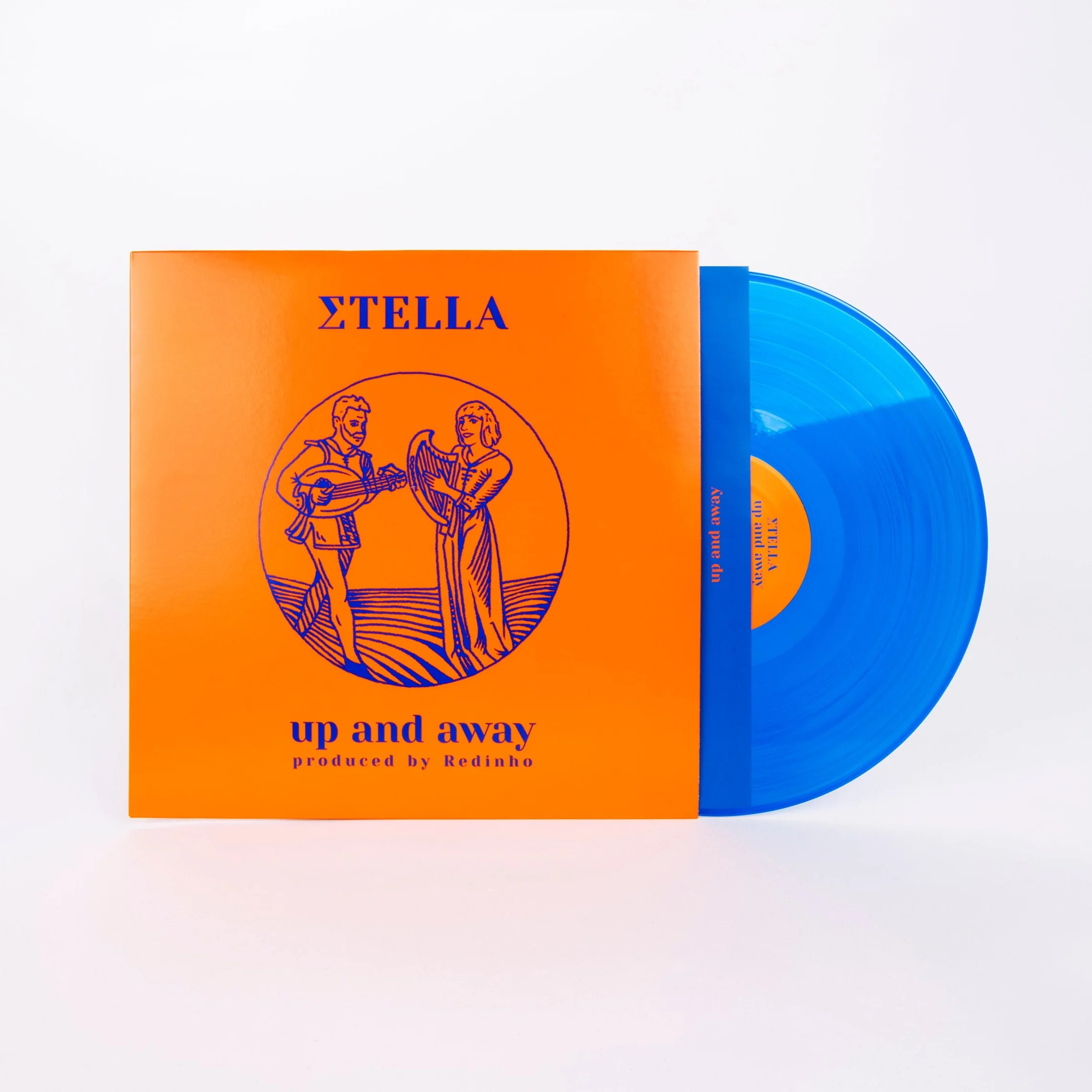


Description
Σtella makes her Sub Pop debut with the mesmerizing Up and Away, an old-school pop paean to the pangs and raptures of love. From the Greek folk-inflected get-go, we’re swept up in Σtella’s world – and it’s quite the captivating place to be.
The singer-songwriter joined forces with artist and producer Tom Calvert (aka Redinho), and it was a match made in Athens; the results are heavenly. Tom caught one of Σtella’s gigs on a visit to the city. He reached out, they started hanging out, and the pair soon clicked creatively. Both mention chemistry when asked about their collaboration and it’s clear, from what we hear, they had it in spades. The meld is seamless.
Σtella’s songs have always riffed on American and Greek mid-century pop but Up and Away doubles down on the vintage aesthetic. Tom says he styled the record “as if it was a rare gem from the ’60s found in a box of records in Athens,” and Σtella notes she was ready for a more “deeply Greek touch – it felt comfortable and right, smoothly fusing with the pop.” The bouzouki appears on a full five tracks played by Christos Skondras who, she says, “was brilliant at improvising,” while Sofia Labropoulou on the kanun “brought an insane amount of dreaminess to the last two songs. Having these amazing musicians play for Up and Away – I couldn’t be more grateful.”
While not exclusively a confessional artist, Σtella is always intimate – when she sings, it’s personal. She says she writes, “about things I feel passion for. Stories about me, about others, about all that’s there in love and war.”While she won’t be drawn out on more private inspirations for this album (“There were one or two interesting things going on in my life, but we won’t be going into those…”), Σtella will say she was, “in a very emotional state at the time, which came through in the lyrics and vocals.” And it’s true, her honeyed voice – layered in those unmistakable harmonies of hers – thrillingly runs the gamut from tender to terse, by turns bracing and smitten, aching and forlorn.
But it’s the lyrics that feel key. Across her output, Σtella has proven herself a strong storyteller, and Up and Away is no exception (the guise of the medieval bard she assumes on the cover is telling). Past releases have been studded with gem-like vignettes – a diverse array of stories set tightly together to form non-linear narratives unified by emotion. Her latest feels singular in that it seems to trace a longer-form tale across songs, with each track escalating the record’s erotic arc. Rollicking album opener “Up and Away” launches us headlong into an all-consuming affair. She’s caught, she shivers, thrilled by a new beginning, the sweetness of her vocals offset by vertiginous, blistering blasts of bouzouki. And so the sensual scene is set.
Languorous “Nomad” sees her fall deeper, groove slower into love. Imbued with a tender urge to understand the other, and tinged with sadness, the song ends with the rhythmic thrum of cicadas – nature too is calling out, courting a mate. “Manéros,” meanwhile, is a foreboding instrumental interlude threaded with driving virtuoso runs of improvised bouzouki shimmers. An 1881 study defines the manéros form as “a ballad of erotic passion bursting from a heart on fire, or a deeply charged lament for the loss of one’s beloved.” Consider this a spoiler for what’s to come.
“Charmed” opens with a disarming sixties “shoop” and lolls delightfully along, its feel-good surface bop hiding more melancholy truths – and insecurities. Not so “Another Nation,” which boasts all the strut and swagger of an artist happy to be stepping out. Here’s how love can feel: as joyous and beautiful and ridiculous as a flamingo galumphing forward to take flight. Boisterous “Black and White” drives home the vagaries of love (“you redirected, you changed your mind”) with a cyclical guitar riff at the song’s heart mirroring the lover’s spiraling complaint.
And then it hits: “Titanic” relays the relationship’s end in ways unexpectedly hopeful, plucking a constellation of endearing bygone names (John Borie, Laura Mae, and the like) from a list of the sunken liner’s survivors. With a breezy whistle, and propelled by bouncing staccato strums, Σtella makes it safe to shore, alone.
The album’s final three tracks are left to deal with the aftermath. Heartfelt “The Truth Is” leaps forward to a time when she feels “alright, but still I miss you every night.” Unable to justify why they’re apart, most everything falls away as the song builds to an emotional climax that has no need of words, with Σtella’s affecting voice left to melt into the bouzouki as she gives us an ever-surging series of sensational “ooos” that compellingly make her case.
Infectiously bassline-led “Who Cares” takes a more petulant, finger-pointing approach before toppling cheerfully into a boozy coping mechanism (“in a bottle we all fell”). But it’s mellow and reflective outro “Is It Over” that perhaps best distills Up and Away’s core concerns: the conflicting and conflicted emotions inherent in love, that live on in ways we can’t always understand or control. Love is like this record: when it’s over, you feel it still for time to come.