The Longer This Goes On
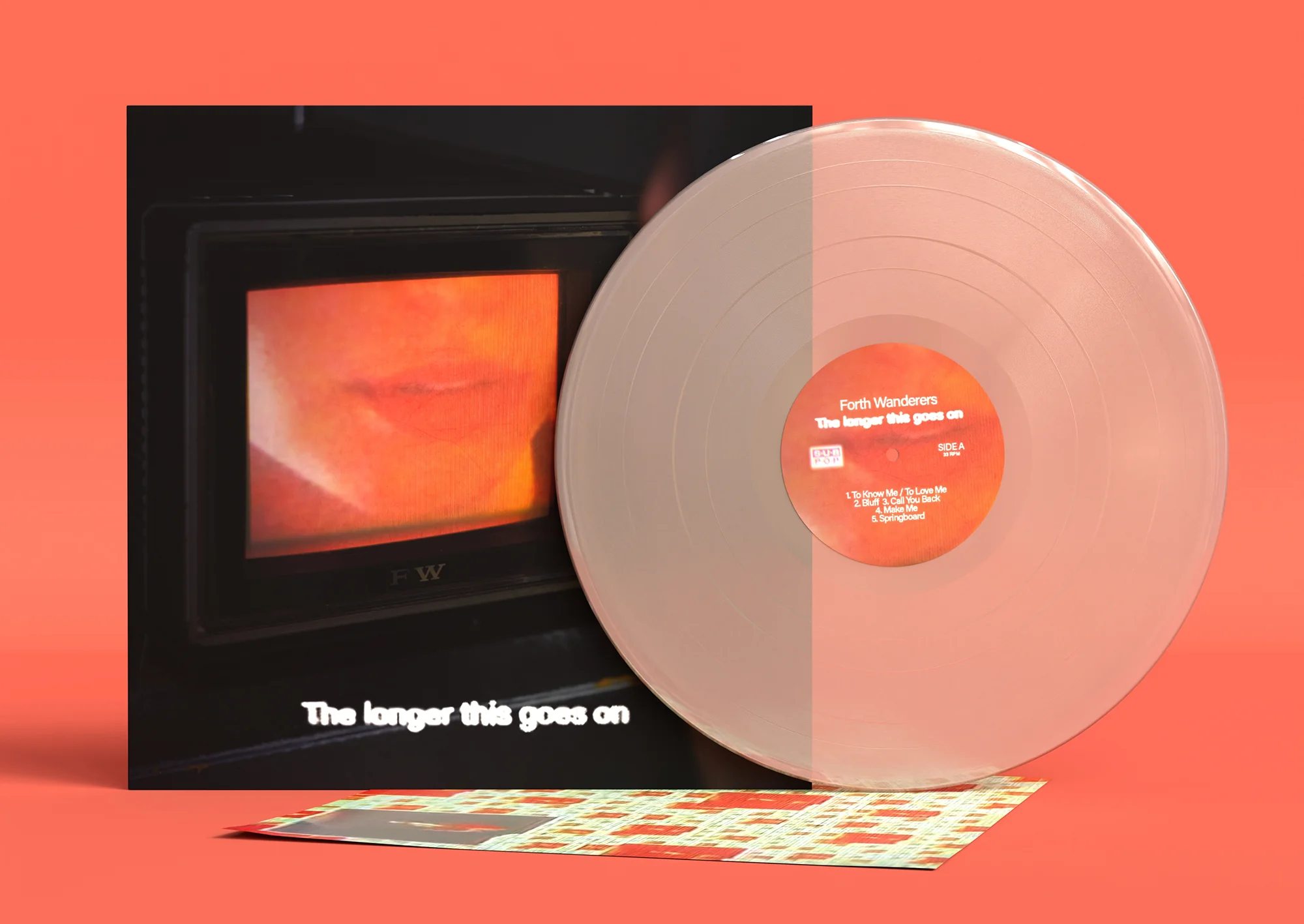
There’s one thing Forth Wanderers want to make clear as they prepare to release their third album The Longer This Goes On: “We’re not back,” guitarist Ben Guterl says emphatically. It’s perhaps an unexpected sentiment to pair with the band’s first album since they parted ways seven years ago, but the band insists it’s just an honest answer—they came together to record the ten intricately constructed gems that make up this new record, and they’re still figuring out what being in Forth Wanderers means to them, over ten years after the project’s conception. Listening to these songs, each a glittering celebration of vocalist Ava Trilling’s urgent and intuitive lyrics and the band’s natural musical chemistry, though, it’s hard to feel like there’s much of anything left unsaid. Filled with spit-shined melodies, chiming vocal harmonies, and slinky, slanted rhythms, the album is more expansive than just a return to form. Here, the band aren’t afraid to take the scenic route to a hook, layering instrumental flourishes to fill in the empty spaces, creating room for Trilling’s haunting range, or repeating a riff or a lyric until it becomes a Zen koan. On The Longer This Goes On, Forth Wanderers sound more self-aware and self-assured than ever before. Just don’t call it a comeback.
The road to The Longer This Goes On began in a Brooklyn coffee shop during the summer of 2021. There, Guterl and Trilling met for the first time since Forth Wanderers’ dissolution in 2018. “We talked for four or five hours about everything under the sun,” Trilling explained. “At the tail end of our conversation, Ben asked if I wanted to try making music again.” The question took her by surprise, but Trilling agreed. The three years they’d been apart had deflated some of the pressures the band felt when they were touring their previous music: “It felt like there wasn’t as much riding on the band,” Guterl added. “We all felt free to mess around and have fun.” Guterl remembers the reassurance he felt when he reconnected to play music with bassist Noah Schifrin, guitarist Duke Greene, and drummer Zach Lorelli: “It felt the best it had between us since we had started the band. It felt like we were just in high school again.”
From the bottom up, the band reimagined the way they were used to working. “Prior to this, the band built songs from demos Ben would send us,” Schifrin explained. “This is the first time where a lot of the music was formed organically.” “All five of us really contributed to the writing process in ways that we hadn’t before in the past,” Guterl added.
There’s evidence of this collaborative environment throughout the album: Take the simmering slowburn “Honey,” which opens with just a reverberating guitar and Trilling’s honeyed vocals, weaving a languid, lazy melody, before a drum fill introduces a gallop. By its end, the song sounds something closer to a blissed-out disco, a honky tonk in heaven. On “Springboard,” the guitar’s melody seems to sizzle, melt, and burst as Trilling’s lyrics twist the voyeuristic gaze on her imagined observer: “Do you like to watch me dance?” But for every slow, sauntering groove, there’s the ebullient pop rush of “Barnard,” which opens with the fervent march of a drum and never looks back, stacking guitar riffs like the fireworks as the song careens towards its explosive conclusion. “Bluff,” by contrast, opens with the cool tones of the keyboard and auxiliary percussion, Trilling’s voice guiding the song through to its melancholic core. These moments, under the watchful eye of producer Dan Howard, capture the band at their most present and unburdened, creating their sound in real time for the very first time.
The distance since the band’s initial split also allowed for some much needed time for growth and reflection. “To be able to apologize for things and address things, to acknowledge how hard it must have been to be a young woman in a band of dudes—we were working through a lot, and it was hard,” Schifrin added. They were, at various points, still only teenagers when their music started gaining traction with musicians like Lorde, and the distance between that adolescent fame and their adult lives has allowed for reflection. “Seven years later, we’re coming together as… not different people, but adults. There’s not the pressure to be labeled a certain way or stay in your comfort zone,” Trilling said. “We had more fun with style and testing what we could get away with, whether it’s bluesy, country, slower, or darker; whatever sounded good.”
Indeed, the fiery spirit of country and blues is present across the record—from the swaggering bassline of “Make Me” to the spun-out melodies of “Spit”—a fitting mode for Trilling’s lyrics, which are at turns wry, painfully honest, and always burning with an undeniable forthrightness. “Don't pull me up / I'd rather we lie down. Move my tongue / so I can make a sound,” she sings on “To Know Me/ To Love Me,” sounding equal parts overwhelmed and over it, as if overcommitting oneself is just the price of entry for a life worth living. On “7 Months,” she sings of sleepless nights and weeks spent lying in bed, only to hope that the nameless “you” in the song will stick by her side. These kinds of confessionals—broad enough to make anyone lost in the mess of an uncertain romantic limbo feel understood, yet so precisely written that it must have clearly come from lived experience—are exactly what made Forth Wanderers songs both so universally relatable and specifically felt. On The Longer This Goes On, they’ve deepened that ability to pull at potent threads of romantic ennui with minimalist lyrics and lush instrumentation.
Forth Wanderers aren’t sure what’s next—they’re not sure if they’ll continue to record new music or if they’ll ever perform these songs live. These recordings, then, are ten fleeting yet invaluable impressions of the time spent as a band; rekindling of friendships between high school buddies whose dreams catapulted them into the spotlight before they were old enough to drive; songs that capture the uncertainty of the future as much as their music cements their own self-confidence in the present. On The Longer This Goes On, Forth Wanderers are making music on their own terms.


Description
There’s one thing Forth Wanderers want to make clear as they prepare to release their third album The Longer This Goes On: “We’re not back,” guitarist Ben Guterl says emphatically. It’s perhaps an unexpected sentiment to pair with the band’s first album since they parted ways seven years ago, but the band insists it’s just an honest answer—they came together to record the ten intricately constructed gems that make up this new record, and they’re still figuring out what being in Forth Wanderers means to them, over ten years after the project’s conception. Listening to these songs, each a glittering celebration of vocalist Ava Trilling’s urgent and intuitive lyrics and the band’s natural musical chemistry, though, it’s hard to feel like there’s much of anything left unsaid. Filled with spit-shined melodies, chiming vocal harmonies, and slinky, slanted rhythms, the album is more expansive than just a return to form. Here, the band aren’t afraid to take the scenic route to a hook, layering instrumental flourishes to fill in the empty spaces, creating room for Trilling’s haunting range, or repeating a riff or a lyric until it becomes a Zen koan. On The Longer This Goes On, Forth Wanderers sound more self-aware and self-assured than ever before. Just don’t call it a comeback.
The road to The Longer This Goes On began in a Brooklyn coffee shop during the summer of 2021. There, Guterl and Trilling met for the first time since Forth Wanderers’ dissolution in 2018. “We talked for four or five hours about everything under the sun,” Trilling explained. “At the tail end of our conversation, Ben asked if I wanted to try making music again.” The question took her by surprise, but Trilling agreed. The three years they’d been apart had deflated some of the pressures the band felt when they were touring their previous music: “It felt like there wasn’t as much riding on the band,” Guterl added. “We all felt free to mess around and have fun.” Guterl remembers the reassurance he felt when he reconnected to play music with bassist Noah Schifrin, guitarist Duke Greene, and drummer Zach Lorelli: “It felt the best it had between us since we had started the band. It felt like we were just in high school again.”
From the bottom up, the band reimagined the way they were used to working. “Prior to this, the band built songs from demos Ben would send us,” Schifrin explained. “This is the first time where a lot of the music was formed organically.” “All five of us really contributed to the writing process in ways that we hadn’t before in the past,” Guterl added.
There’s evidence of this collaborative environment throughout the album: Take the simmering slowburn “Honey,” which opens with just a reverberating guitar and Trilling’s honeyed vocals, weaving a languid, lazy melody, before a drum fill introduces a gallop. By its end, the song sounds something closer to a blissed-out disco, a honky tonk in heaven. On “Springboard,” the guitar’s melody seems to sizzle, melt, and burst as Trilling’s lyrics twist the voyeuristic gaze on her imagined observer: “Do you like to watch me dance?” But for every slow, sauntering groove, there’s the ebullient pop rush of “Barnard,” which opens with the fervent march of a drum and never looks back, stacking guitar riffs like the fireworks as the song careens towards its explosive conclusion. “Bluff,” by contrast, opens with the cool tones of the keyboard and auxiliary percussion, Trilling’s voice guiding the song through to its melancholic core. These moments, under the watchful eye of producer Dan Howard, capture the band at their most present and unburdened, creating their sound in real time for the very first time.
The distance since the band’s initial split also allowed for some much needed time for growth and reflection. “To be able to apologize for things and address things, to acknowledge how hard it must have been to be a young woman in a band of dudes—we were working through a lot, and it was hard,” Schifrin added. They were, at various points, still only teenagers when their music started gaining traction with musicians like Lorde, and the distance between that adolescent fame and their adult lives has allowed for reflection. “Seven years later, we’re coming together as… not different people, but adults. There’s not the pressure to be labeled a certain way or stay in your comfort zone,” Trilling said. “We had more fun with style and testing what we could get away with, whether it’s bluesy, country, slower, or darker; whatever sounded good.”
Indeed, the fiery spirit of country and blues is present across the record—from the swaggering bassline of “Make Me” to the spun-out melodies of “Spit”—a fitting mode for Trilling’s lyrics, which are at turns wry, painfully honest, and always burning with an undeniable forthrightness. “Don't pull me up / I'd rather we lie down. Move my tongue / so I can make a sound,” she sings on “To Know Me/ To Love Me,” sounding equal parts overwhelmed and over it, as if overcommitting oneself is just the price of entry for a life worth living. On “7 Months,” she sings of sleepless nights and weeks spent lying in bed, only to hope that the nameless “you” in the song will stick by her side. These kinds of confessionals—broad enough to make anyone lost in the mess of an uncertain romantic limbo feel understood, yet so precisely written that it must have clearly come from lived experience—are exactly what made Forth Wanderers songs both so universally relatable and specifically felt. On The Longer This Goes On, they’ve deepened that ability to pull at potent threads of romantic ennui with minimalist lyrics and lush instrumentation.
Forth Wanderers aren’t sure what’s next—they’re not sure if they’ll continue to record new music or if they’ll ever perform these songs live. These recordings, then, are ten fleeting yet invaluable impressions of the time spent as a band; rekindling of friendships between high school buddies whose dreams catapulted them into the spotlight before they were old enough to drive; songs that capture the uncertainty of the future as much as their music cements their own self-confidence in the present. On The Longer This Goes On, Forth Wanderers are making music on their own terms.