Mimi
You get older, you have a family, and you start to slow down—that’s how things are supposed to go, right? Not for Montreal band Corridor, who have returned on their fourth album, Mimi, with a sound and style that’s more widescreen and expansive than anything that’s preceded it. The follow-up to 2019’s Junior is a huge step forward for the band, as the members themselves have undergone the type of personal changes that accompany the passage of time; even as these eight songs reflect a newfound and contemplative maturity, however, Corridor are branching out more than ever with richly detailed music, resulting in a record that feels like a fresh break for a band that’s already established themselves as forward-thinkers.
Mimi immediately recalls the best of the best when it comes to indie rock—Deerhunter’s silvery atmospherics immediately come to mind, as well as the spiky effervescence of classic post-punk—but despite these easy comparisons, Corridor remain impossible to pin down from song to song, which makes Mimi all the more thrilling as a listen. The road to this point, as roads to greatness often are, was not without challenge; if the elastic guitar rock of Junior came together quickly—or, as guitarist and vocalist Jonathan Robert describes the process, “in a rush”—then the steady-as-they-go creative pace of Mimi marked a desire to break from the “exhausting” work ethic that previously birthed Junior.
“The goal was to work differently, which is the goal we have every time we work on a new album—to build something in a new way,” Robert explains. “This time, we took our time.” And so in the summer of 2020, Corridor’s members—Robert, vocalist/bassist Dominic Berthiaume, drummer Julien Bakvis, and multi-instrumentalist Samuel Gougoux—holed away in a cottage to engage in the sort of creative experimentation that would lead to Mimi’s ultimate creation. “We went there to write, and a lot of ideas came from that retreat,” Berthiaume explains. “We didn’t end up with songs as much as we did ideas, so the result is a collage of the ideas.”
After that productive session together, Corridor continued to tinker with the songs’ raw parts digitally and remotely over the next few years, with co-producer Joojoo Ashworth (Dummy, Automatic) lending their own specific talents in the theoretical booth. The process was a byproduct of not having access to their previous rehearsal space as the COVID-19 pandemic faded from public view, but also a result of the four-piece leaning harder into incorporating electronic textures than on previous records.
“For a long time, we identified as a guitar-oriented band, and the goal of making this whole record was trying to get away from that,” Berthiaume states while admitting that the band encountered their own challenges as a result: “We had to figure out how to make new songs without having the chance to play together. It was complicated sometimes.” Berthiaume also describes Mimi—which, fun fact, is also named after Jonathan’s cat—as a record about “getting older” and “figuring out new parts of life”—but despite any claims of transitional growing pains from the band, Mimi is a record bursting with new energy and life, a vibrance that’s owed in no small part to Gougoux joining the band full-time after pitching in on live performances in the past.
“I come more from a background of electronic music, so it was nice to involve that with the band more,” he explains, and Mimi contains a distinct rhythmic pulse reminiscent of classic era-post-punk’s own melding of dance and rock textures. Over bright, chiming guitars and ascending synths, Robert addresses his looming mortality on “Mourir Demain”: “I wrote it when my girlfriend and I were shopping for life insurance,” he laughs. With our little daughter growing up, we also considered making our will. I said to myself, ‘Oh shit, from now on I’m slowly starting to plan my death.”
“Jump Cut” is pure psychedelic bliss, with hypnotic ziggurats of guitar lines aligning themselves in the distance as Robert and Berthiaume’s vocals excitingly duck and weave throughout the lovely chaos created; meanwhile, the nocturnal air of “Caméra” provides perfect cover for ruminations on self-promotion and exposure in the digital age, while the hypnotic haze of “Mon Argent” tackles the realities of making a living while making music. “Nothing is more abstract, insecure, and random than a musician’s income,” Jonathan muses while discussing the song’s thematic bent. “The responsibilities piling up in my adult life have, unfortunately, prevented me from continuing to avoid the subject. We end up giving a lot of importance to something we don’t understand.”
Don’t mistake this as music about dead ends, though, as Mimi embraces and champions unfettered creativity while paving a way for Corridor’s own bright future. “We just focused on making a record that sounded the way we wanted,” Gougoux exclaims while discussing the band’s aims. “There were no limitations when it came to what was possible.”
Original: $10.00
-65%$10.00
$3.50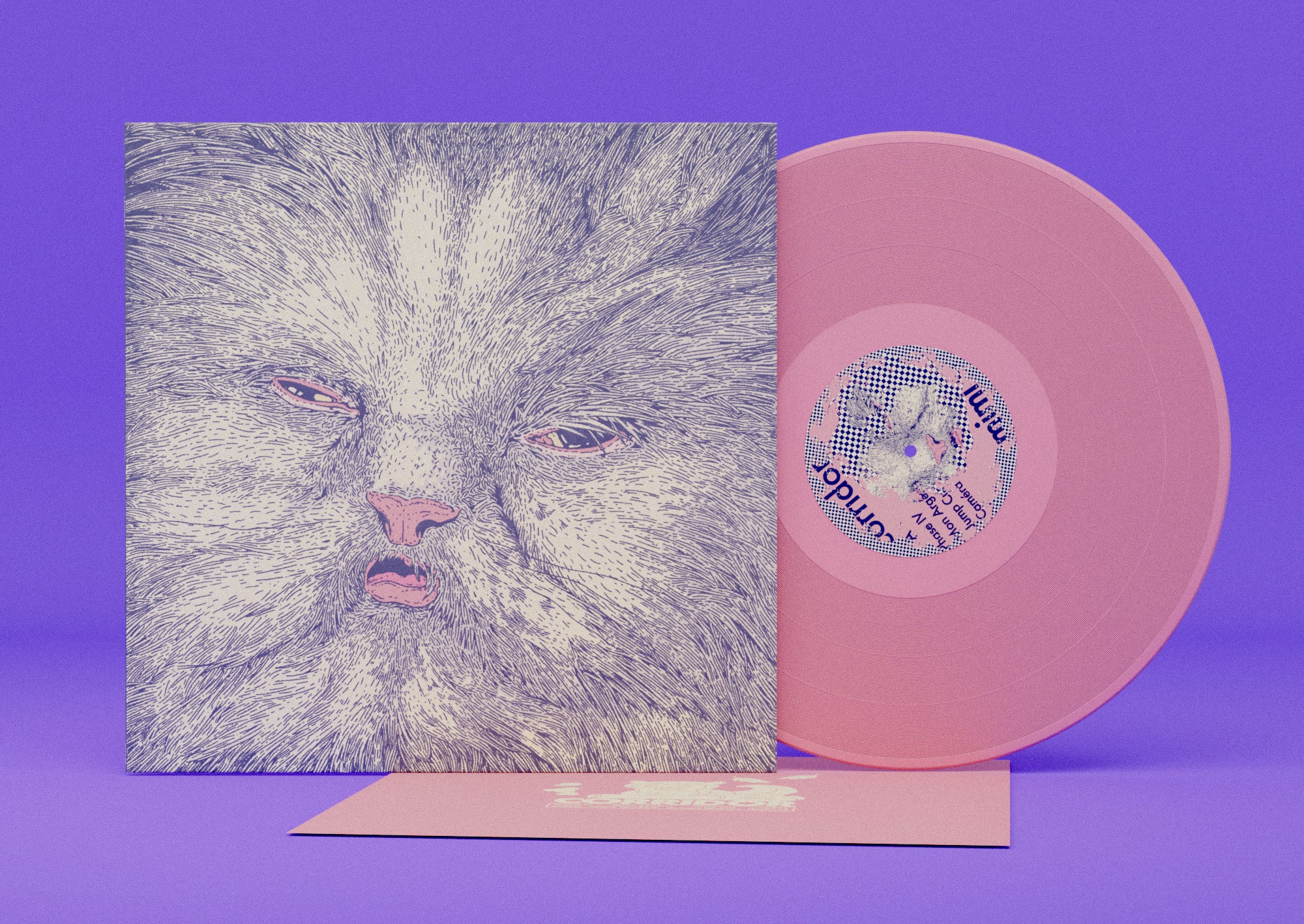


Description
You get older, you have a family, and you start to slow down—that’s how things are supposed to go, right? Not for Montreal band Corridor, who have returned on their fourth album, Mimi, with a sound and style that’s more widescreen and expansive than anything that’s preceded it. The follow-up to 2019’s Junior is a huge step forward for the band, as the members themselves have undergone the type of personal changes that accompany the passage of time; even as these eight songs reflect a newfound and contemplative maturity, however, Corridor are branching out more than ever with richly detailed music, resulting in a record that feels like a fresh break for a band that’s already established themselves as forward-thinkers.
Mimi immediately recalls the best of the best when it comes to indie rock—Deerhunter’s silvery atmospherics immediately come to mind, as well as the spiky effervescence of classic post-punk—but despite these easy comparisons, Corridor remain impossible to pin down from song to song, which makes Mimi all the more thrilling as a listen. The road to this point, as roads to greatness often are, was not without challenge; if the elastic guitar rock of Junior came together quickly—or, as guitarist and vocalist Jonathan Robert describes the process, “in a rush”—then the steady-as-they-go creative pace of Mimi marked a desire to break from the “exhausting” work ethic that previously birthed Junior.
“The goal was to work differently, which is the goal we have every time we work on a new album—to build something in a new way,” Robert explains. “This time, we took our time.” And so in the summer of 2020, Corridor’s members—Robert, vocalist/bassist Dominic Berthiaume, drummer Julien Bakvis, and multi-instrumentalist Samuel Gougoux—holed away in a cottage to engage in the sort of creative experimentation that would lead to Mimi’s ultimate creation. “We went there to write, and a lot of ideas came from that retreat,” Berthiaume explains. “We didn’t end up with songs as much as we did ideas, so the result is a collage of the ideas.”
After that productive session together, Corridor continued to tinker with the songs’ raw parts digitally and remotely over the next few years, with co-producer Joojoo Ashworth (Dummy, Automatic) lending their own specific talents in the theoretical booth. The process was a byproduct of not having access to their previous rehearsal space as the COVID-19 pandemic faded from public view, but also a result of the four-piece leaning harder into incorporating electronic textures than on previous records.
“For a long time, we identified as a guitar-oriented band, and the goal of making this whole record was trying to get away from that,” Berthiaume states while admitting that the band encountered their own challenges as a result: “We had to figure out how to make new songs without having the chance to play together. It was complicated sometimes.” Berthiaume also describes Mimi—which, fun fact, is also named after Jonathan’s cat—as a record about “getting older” and “figuring out new parts of life”—but despite any claims of transitional growing pains from the band, Mimi is a record bursting with new energy and life, a vibrance that’s owed in no small part to Gougoux joining the band full-time after pitching in on live performances in the past.
“I come more from a background of electronic music, so it was nice to involve that with the band more,” he explains, and Mimi contains a distinct rhythmic pulse reminiscent of classic era-post-punk’s own melding of dance and rock textures. Over bright, chiming guitars and ascending synths, Robert addresses his looming mortality on “Mourir Demain”: “I wrote it when my girlfriend and I were shopping for life insurance,” he laughs. With our little daughter growing up, we also considered making our will. I said to myself, ‘Oh shit, from now on I’m slowly starting to plan my death.”
“Jump Cut” is pure psychedelic bliss, with hypnotic ziggurats of guitar lines aligning themselves in the distance as Robert and Berthiaume’s vocals excitingly duck and weave throughout the lovely chaos created; meanwhile, the nocturnal air of “Caméra” provides perfect cover for ruminations on self-promotion and exposure in the digital age, while the hypnotic haze of “Mon Argent” tackles the realities of making a living while making music. “Nothing is more abstract, insecure, and random than a musician’s income,” Jonathan muses while discussing the song’s thematic bent. “The responsibilities piling up in my adult life have, unfortunately, prevented me from continuing to avoid the subject. We end up giving a lot of importance to something we don’t understand.”
Don’t mistake this as music about dead ends, though, as Mimi embraces and champions unfettered creativity while paving a way for Corridor’s own bright future. “We just focused on making a record that sounded the way we wanted,” Gougoux exclaims while discussing the band’s aims. “There were no limitations when it came to what was possible.”